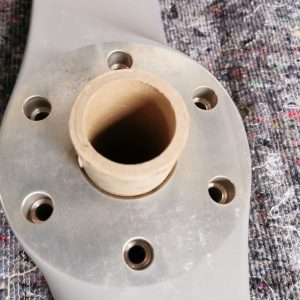
New, Never Installed offers replacement and project value for buyers seeking an unused fixed-pitch propeller with clear manufacturer identification and documented storage history.
The shortened Sensenich 74DM6 Propeller description can improve search visibility, while the complete part number should remain available for technical review.
These related phrases connect the product with buyers seeking a durable and comparatively straightforward general aviation propeller design.
A 74-Inch Aircraft Propeller and 60-Inch Pitch Propeller should be confirmed through manufacturer markings, approved data, and suitable measurement rather than model interpretation alone.
Clear terminology supports both search performance and responsible aviation-product presentation.
Reviewing P/N 74DM6-0-60 Markings
A propeller should not be accepted as P/N 74DM6-0-60 solely because it resembles another Sensenich model shown in a catalog or online advertisement.
Reliable traceability improves the commercial and maintenance value of the Sensenich 74DM6 Propeller.
Separating Storage History from Serviceability
The seller should disclose the purchase date, ownership history, storage environment, packaging condition, and any previous trial fitting.
New, Never Installed.
Matching Propeller Design to Aircraft Performance
Correct matching protects the engine, propeller, and aircraft from unsuitable loading or operation.
Professional verification supports responsible use of the Sensenich Fixed-Pitch Propeller.
Inspecting the Sensenich Aluminum Propeller
Even a new and never-installed propeller should be checked for handling marks, coating defects, scratches, dents, and environmental exposure.
Responsible care supports the condition of the Aluminum Aircraft Propeller.
Avoiding Unverified Propeller Size Claims
The measurement should not be assumed from packaging labels or seller estimates alone.
Professional measurement supports the responsible use of the 74-Inch Aircraft Propeller.
Verifying the 74DM6-0-60 Pitch
The seller should not guarantee specific performance based only on the pitch designation.
A blade-to-blade pitch difference can contribute to vibration, reduced efficiency, and unequal aerodynamic loading.
Selecting an Approved Propeller Installation
The Lycoming O-320 engine family includes different models, power ratings, flange configurations, operating limits, and aircraft applications.
Qualified research supports responsible selection of a Lycoming O-320 Propeller.
Inspecting the Complete Propeller Assembly
A Two-Blade Aircraft Propeller should be evaluated as a complete matched assembly rather than as two independent blade components.
A never-installed propeller may still require static balance verification after extended storage or transportation.
Bolt Pattern and Engine Flange Compatibility
The propeller hub should match the receiving engine flange, pilot diameter, bolt pattern, approved spacer arrangement, spinner components, and required installation hardware.
Fasteners should not be selected solely by visual appearance, basic diameter, or thread size.
Checking a New Sensenich Propeller
The depth, location, orientation, and check here extent of any defect affect the appropriate inspection or corrective action.
Unauthorized sanding, filing, blending, refinishing, or polishing should be avoided.
Corrosion Inspection and Storage History
Aluminum propellers can develop corrosion after exposure to moisture, condensation, coastal air, chemicals, damaged coatings, or unsuitable storage materials.
Periodic inspection can identify developing coating or environmental concerns.
Separating Certification from Current Condition
The Certified Aircraft Propeller description generally refers to a propeller design manufactured under applicable approved production and certification standards.
Organized records strengthen the commercial value of the Certified Aircraft Propeller.
Propeller Traceability and Documentation
Conflicting or incomplete identification should be resolved before payment or installation.
Available records may include factory paperwork, conformity documents, release certificates, storage records, purchase invoices, inspection reports, and aircraft-project information.
Pre-Purchase Inspection Checklist
Detailed review reduces unsuitable purchases and unexpected inspection costs.
- Resolve identity, applicability, dimensions, condition, and package-completeness questions before payment.
- Confirm the manufacture or purchase date, storage duration, environmental conditions, preservation method, ownership history, and absence of operating time.
- Inspect and photograph the propeller immediately after delivery before cleaning, measuring, balancing, repairing, mounting, or modifying it.
Protecting a New Two-Blade Propeller in Transit
Moisture-resistant wrapping may be appropriate when it does not trap condensation against the aluminum.
The shipping crate should identify appropriate lifting and handling points so carriers do not use the propeller blades as handles.
Preventing Corrosion and Handling Damage
Responsible storage preserves the future usefulness of the Aluminum Aircraft Propeller.
Preservation materials should be removed using appropriate procedures before inspection or installation.
Professional Installation Requirements
Professional installation protects the propeller, engine, and airframe.
The propeller should seat correctly against the approved mounting arrangement without rocking, binding, forced alignment, or surface contamination.
After installation, technicians should verify security, propeller clearance, blade tracking, spinner alignment, hardware condition, and surrounding aircraft components before starting the engine.
Routine Sensenich Propeller Maintenance
Routine maintenance should include inspection of blade faces, backs, leading edges, trailing edges, tips, hub, mounting hardware, spinner components, blade tracking, finish, and signs of corrosion or movement.
Recurring vibration should prompt review of the propeller, spinner, engine mounts, flange, ignition system, and engine condition.
Choosing a Valuable Aviation Component
Honest information strengthens buyer confidence and reduces disputes.
Availability of qualified maintenance support and approved installation data can influence long-term ownership value.
74DM6-0-60 Aircraft Propeller Conclusion
New, Never Installed can provide valuable replacement, restoration, new-construction, engine-installation, inventory, or resale potential when its identity, dimensions, storage history, condition, and applicability are verified.
The propeller should be evaluated with the receiving aircraft’s Lycoming engine, flange, spinner, operating limitations, clearances, and approved installation requirements in mind.
Whether the propeller is purchased for replacement, restoration, new construction, spare inventory, resale, or an aircraft project, transparent information and qualified oversight provide the strongest foundation.
With responsible purchasing, dimensional verification, corrosion and damage inspection, correct hardware, tracking, and balance evaluation, the component can remain a valuable aviation asset.